
Ads are entering the answer.
OpenAI is moving advertising from the page into the moment of exploration. Creators and founders should design for usefulness before they design for placement.
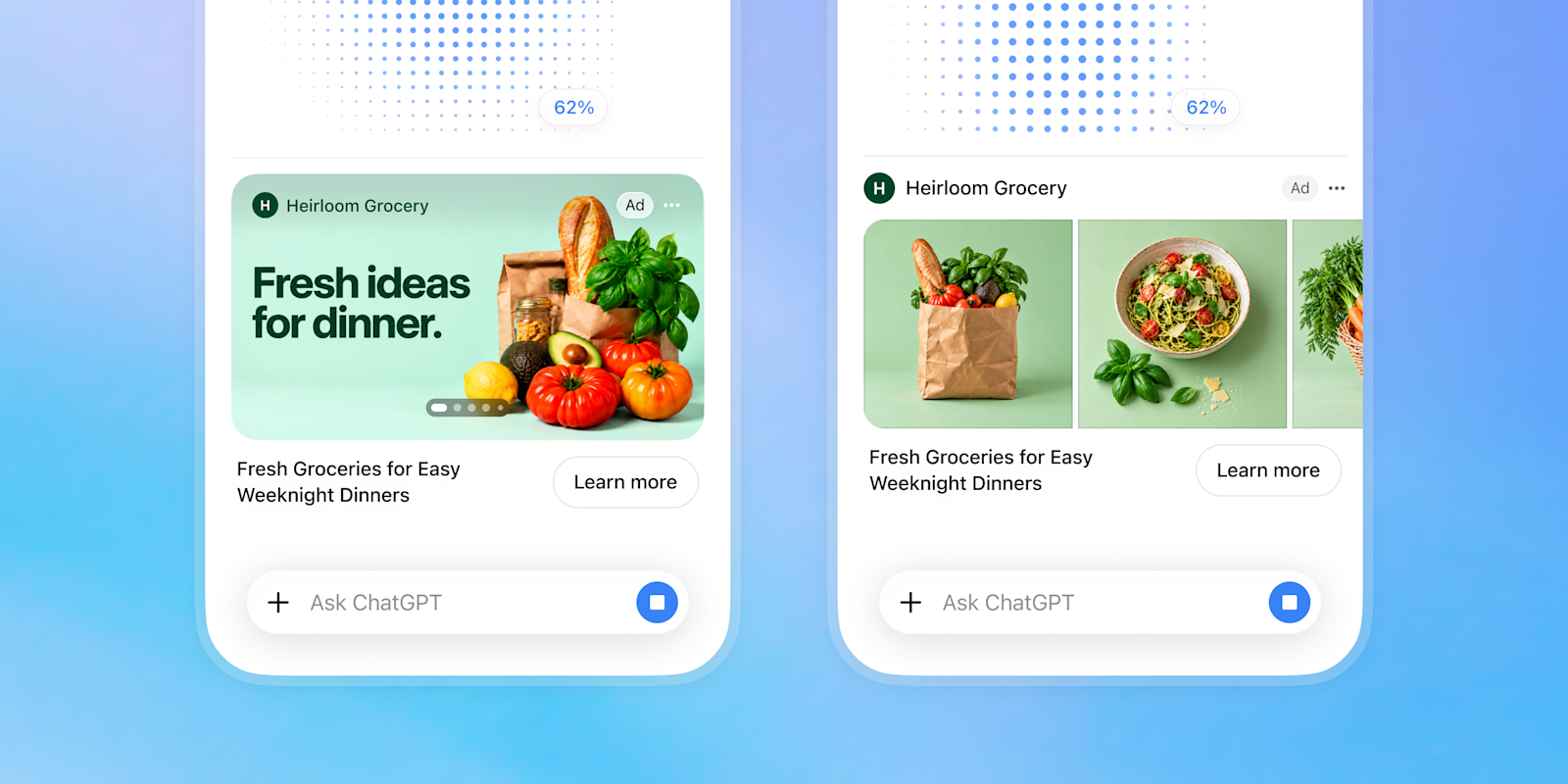
The next ad surface is not a feed. It is a decision journey.
OpenAI announced a new visual ad format for ChatGPT, initially to be tested during image generation in the United States with an initial group of advertisers later this month. The company says ads will be clearly labeled, remain separate from the image being created, and not influence ChatGPT’s answers.[1]
This is a verified product announcement, not proof that the format will outperform search, social or creator distribution. But it is a meaningful shift in where commercial discovery can happen: inside a user’s attempt to imagine, compare or make something.
Context becomes the storefront.
OpenAI says the format is designed to help people explore products and services through images showing product inspiration, product usage or the experiences a product makes possible. It is also expanding measurement integrations with Hightouch, Tealium and LiveRamp, plus attribution partnerships across web and app measurement.[1]
OpenAI’s ad policies say sensitive, emotionally vulnerable and brand-unsafe conversations are excluded from ad placement. The policy also says ads must be clearly distinguishable from ChatGPT and may not imitate its interface in a way that confuses users.[2]
For a small team, the immediate work is not buying media. It is sharpening the offer: define the user’s problem, show the before-and-after, and make the next action measurable. A visual ad can earn attention, but only a credible product experience can earn the second decision. Treat this channel as a discovery hypothesis to test, not a new content treadmill. The discipline is familiar: one audience, one job, one proof point, one measurable next step, reviewed against an unexposed comparison. That keeps novelty from becoming strategy and makes the learning portable across channels.
Build the answer around the job.
Show the transformation.
Make the asset explain what changes for the person—not merely what the product looks like.
Package intent, not inventory.
Write landing pages and demos around the decision a user is trying to make.
Measure the next action.
Instrument qualified discovery, assisted conversion and incrementality; do not confuse clicks with trust.
Protect the boundary.
Keep paid influence visibly separate from advice, recommendations and the user’s private context.
Don’t chase the new slot. Earn the next decision.
If AI-native discovery becomes a major route to market, the durable advantage will belong to businesses with clear outcomes, visual proof and trustworthy measurement. That is an inference from the product direction—not a reported result. Start by rewriting one offer around the user’s next decision, then test whether the creative helps them act.
JUFU DAILY / RESEARCH NOTE